Week 6 - Game Feel and Decisions
Based off of the playtests from last week, we focused heavily on player quality of life. After some research on platformer mechanics, we found a multitude of subtle elements that some super successful platformers have implemented to improve player satisfaction. The first of which has the awesome name, "coyote time" (named after the looney tunes character's moment of zero gravity when falling off cliffs), which allows the player some leeway after leaving platformers to input a jump command. Gameplay immediately felt nicer after this simple implementation. The second QoL change is adding a small jump buffer that allows the player to input a jump command just before hitting the ground, and have it still register. This lets players execute precise platform challenges much more easily as they don't have to wait until their player is completely grounded before trying to jump again.
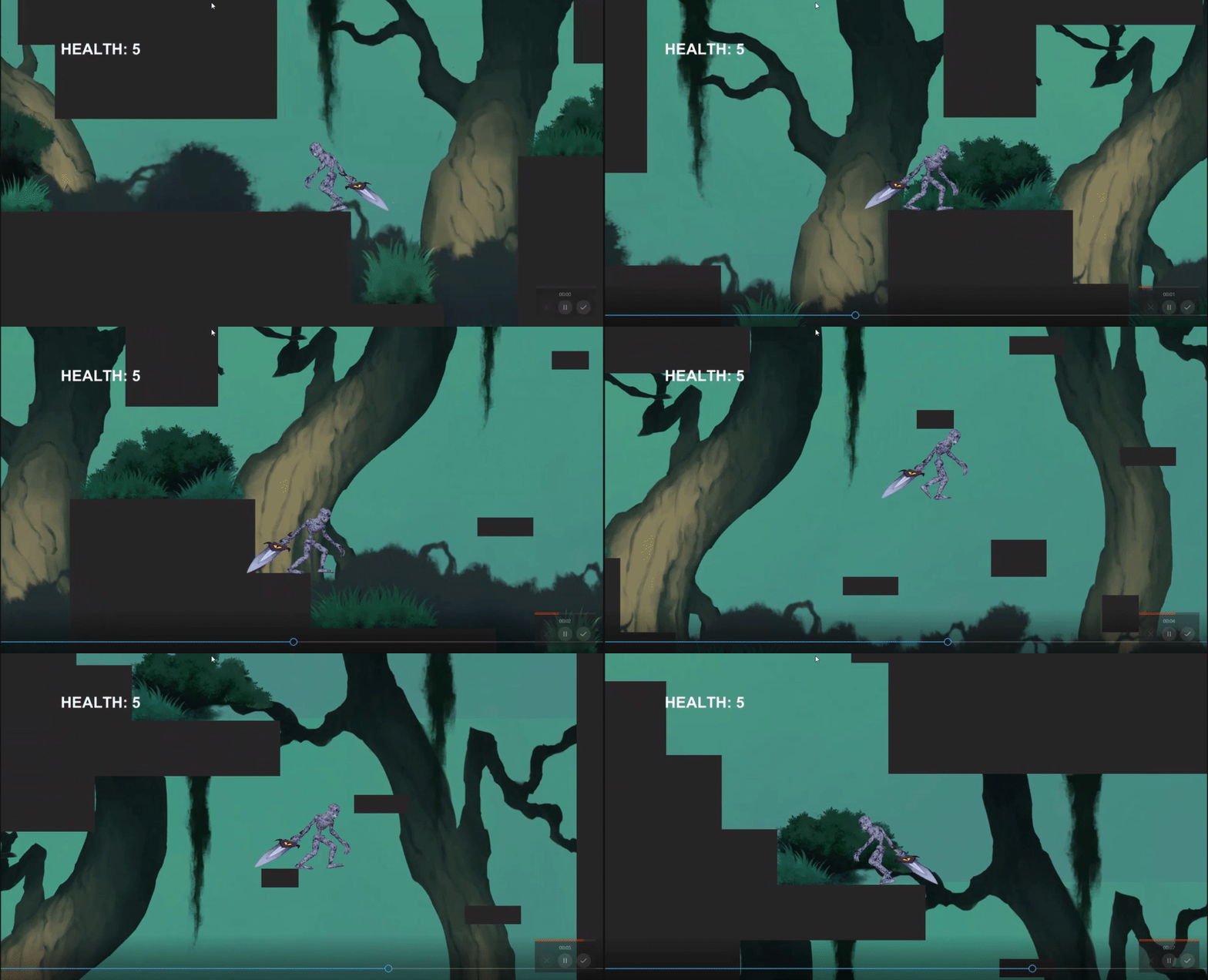
We also had a tough decision to make this week. So far, our project has been entirely in 2D, with 2D sprite assets, backgrounds and tilemaps. However, we've been modelling our characters in 3D, before taking 2D renders of the model's animations to create sprites for the 2D project. We did this because one of our team's artists has a wealth of 3D modelling and animation experience, as well as we found a number of other 2D games have employed the same tactic. 3D animation gives animators a lot more freedom to be creative, because of the ability to easily rotate, and rig the character models. This week we spent a lot of time struggling with the render settings to create assets with the visual fidelity we want. It made us worry about having to potentially re-render all of our character assets in the future, and having a 3D project would allow us to leave that worry behind, since 3D models can be easily updated with new visuals and animations.
This week, we're moving on with our development to hopefully have our state changing mechanic implemented for the player, as well as start on implementing environmental obstacles and player health. We will also explore the option of switching the project into a 3D environment and decide whether it will be worth the extra work.

We also had a tough decision to make this week. So far, our project has been entirely in 2D, with 2D sprite assets, backgrounds and tilemaps. However, we've been modelling our characters in 3D, before taking 2D renders of the model's animations to create sprites for the 2D project. We did this because one of our team's artists has a wealth of 3D modelling and animation experience, as well as we found a number of other 2D games have employed the same tactic. 3D animation gives animators a lot more freedom to be creative, because of the ability to easily rotate, and rig the character models. This week we spent a lot of time struggling with the render settings to create assets with the visual fidelity we want. It made us worry about having to potentially re-render all of our character assets in the future, and having a 3D project would allow us to leave that worry behind, since 3D models can be easily updated with new visuals and animations.
This week, we're moving on with our development to hopefully have our state changing mechanic implemented for the player, as well as start on implementing environmental obstacles and player health. We will also explore the option of switching the project into a 3D environment and decide whether it will be worth the extra work.

Comments
Post a Comment