Week 2 - Polishing the Concept
We're lucky in that we have a fairly fleshed out idea and our proposal was well received, so we haven't had to change much or do any backtracking going into our second week of iteration. This week was primarily about refining the core loop of the game and making sure we are all on the same page for how the game works. We've started a master game design document and created a trello board to start organizing our tasks. Using the trello board, we've also began to figure out what each of us want to contribute to the project and we've began some early exploration into our respective roles.
Our developers have already begun exploring how to manage player state changes, loading level areas, as well as enemy AI. Alongside this early exploration, we've been trying to make as many visual decisions as we can early, so we've been creating a lot of concept art for character, enemy, and environmental designs. One change we have mde, is that we've made the decision to create the game using only 2D assets but using 3D models for all animated characters and sprites. To do this, we're following a strategy used in the development of Ori and the Blind Forest in which they took orthographic rendering of 3D animations to create 2D sprites, while maintaining the freedom of animating in 3D.
Going forward, we hope to complete out game design document with relevant wireflows, and imagery so we can begin developing our prototype as soon as possible.


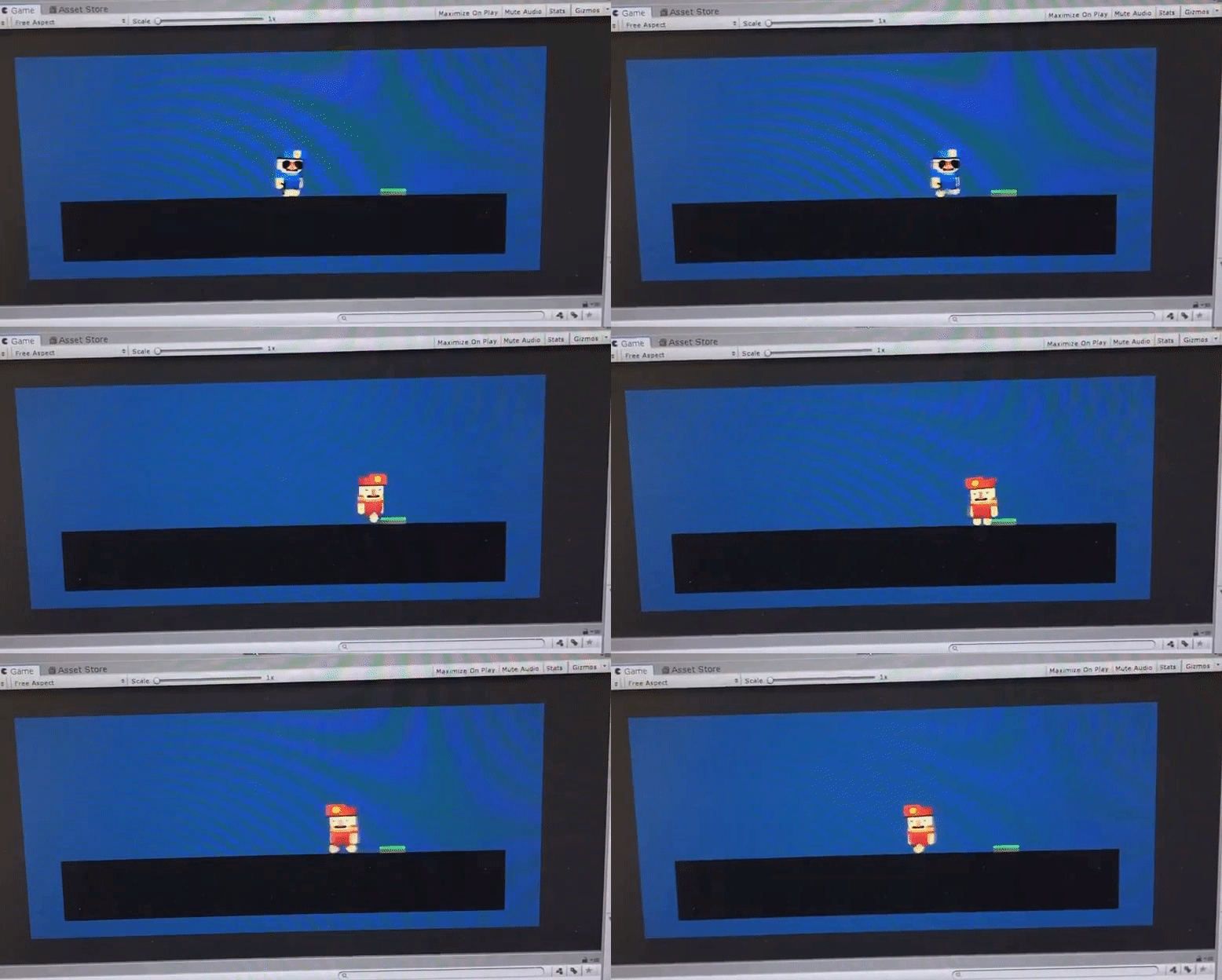

Our developers have already begun exploring how to manage player state changes, loading level areas, as well as enemy AI. Alongside this early exploration, we've been trying to make as many visual decisions as we can early, so we've been creating a lot of concept art for character, enemy, and environmental designs. One change we have mde, is that we've made the decision to create the game using only 2D assets but using 3D models for all animated characters and sprites. To do this, we're following a strategy used in the development of Ori and the Blind Forest in which they took orthographic rendering of 3D animations to create 2D sprites, while maintaining the freedom of animating in 3D.
Going forward, we hope to complete out game design document with relevant wireflows, and imagery so we can begin developing our prototype as soon as possible.
Comments
Post a Comment